Curvance is designed to scale across multiple blockchains, enabling high-performance and high-volume interoperability. The platform is trusted by users and industry leaders for its reliability and security. Compared to other cross-chain solutions like the Mayan protocol, which is known for fast and efficient token transfers, Curvance offers optimized routing and seamless bridging capabilities. By combining Curvance crypto strategies with the high-speed Monad bridge, users can now access a unified ecosystem where capital efficiency is paramount, and seamless asset transfers are facilitated.
Introduction to Curvance & MonadBridge Overview
Curvance is Monad’s hyper-efficient, modular, multichain decentralized finance (DeFi) protocol designed to optimize liquidity management and yield farming. Understanding how to use the monad bridge infrastructure is essential for accessing curvance crypto markets. Whether you’re exploring bridge monad pathways or the official monadbridge solutions, curvance monad serves as the primary destination for users seeking optimized yield on their assets.
Built specifically for Monad’s high-throughput environment, Curvance integrates with Wormhole’s native token transfers and supports multiple chains to enable seamless asset transfers. The Monad Native Bridge enables seamless multichain transfers of native assets, such as MON and ETH, between Monad and Ethereum, utilizing Wormhole’s NTT standard and Axelar’s General Message Passing. By integrating with Axelar, applications built on Monad can easily send messages and assets between over 49 blockchains connected via Axelar, enhancing cross-chain interoperability. Mayan is another cross-chain swap protocol that facilitates fast and efficient token transfers across multiple chains, leveraging optimized routing and robust inter-chain connections. This article covers TVL metrics, fees, yield opportunities, security protocols, and practical steps for moving assets via various Monad bridge options.
Curvance Crypto: Core Protocol Information on Monad
Curvance crypto functions as Monad’s lending and yield-optimization layer, supporting yield-bearing assets like LSTs, LP tokens, and restaked assets as productive collateral.
Deployed on Monad mainnet, the protocol matches the chain’s fast finality and sub-cent transaction fees. Users benefit from:
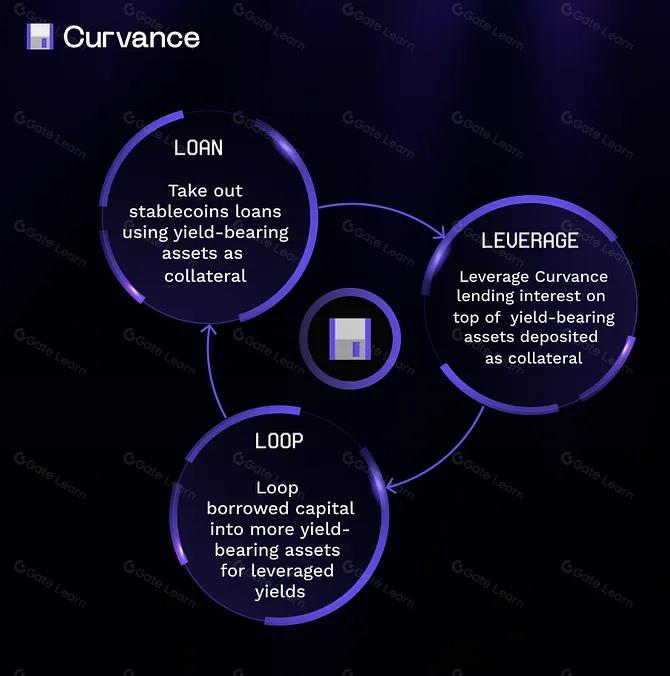
- One-click leverage looping up to 25x, simplifying the process of reinvesting borrowed funds to increase potential yields
- Risk-isolated money markets per asset profile that allow users to manage exposure by separating different lending and borrowing activities, enhancing safety
- Plugin architecture enabling dApp integration and empowering developers to execute cross-chain actions such as token transfers and message sending seamlessly within their decentralized applications
- High Loan-to-Value (LTV) ratios, enabling lending up to 95–97% for top-tier assets like ETH
- ERC-4626 vaults that automate the management of yield-bearing assets, allowing assets to be deposited once and automatically allocated across multiple yield sources
Official resources include the Curvance website, documentation portal, GitHub repository, and Twitter/X for updates. Developers can connect Curvance liquidity directly into vaults and applications across the network.
Curvance TVL, Fees & Revenue Performance
The launch of Curvance on Monad marked its official debut, driving rapid TVL growth and accelerating protocol adoption. Total Value Locked demonstrates protocol health and user trust. Curvance ranks among the top 3 lending protocols on Monad by TVL, with growth facilitated by SQD integration that reduced indexing from days to minutes.
Protocol fee sources include:
- Interest spreads between supply and borrow APYs
- Liquidation penalties on undercollateralized positions
- Performance fees on specialized vaults
Revenue flows to the treasury, veCVE lockers, and governance stakers via buybacks, ensuring long-term capital efficiency and sustainability.
Yield Opportunities on Curvance Monad
Curvance monitors 30+ pools for diversified yield strategies. Users can access supply APY from borrower interest, borrow APY for leveraged positions, and boosted yields through veCVE locks.
Typical yield ranges:
- Stablecoin markets: 5–15% APY
- Volatile assets (WETH/WBTC): 10–25% APY
- Leveraged positions: amplified returns with higher risk
Pool types include MON-stablecoin pairs, LST-backed markets, and LP-token collateral pools. Yields compound via automation, with oracles ensuring real-time pricing and efficiency in cost management. Curvance uses a “Dual Oracle” system for security, employing multiple feed sources to prevent liquidation cascades.
Monad Bridge & MonadBridge: Wormhole Messaging, Moving Assets to Curvance
To use Curvance, users typically start by bridging via a monad bridge solution. The official MonadBridge, powered by Wormhole messaging and Axelar GMP infrastructure, supports transfer of MON, ETH, stablecoins, and other tokens from Ethereum to Monad.
Third-party providers expand access further:
- Wormhole, Axelar, LayerZero for interoperability
- Relay, Squid, Bungee, LI.FI as aggregators
- Support for 40+ source chains
Benefits include fast finality, minimal fees, unified liquidity, and reduced manual RPC configuration. Bridge monad pathways enable multichain applications to route assets directly into Curvance markets.
Bridge Assets, Initiate Native Token Transfers to Monad and Start Using Curvance Crypto
Ready to get started? Here’s your practical playbook for accessing Curvance via monadbridge solutions.
Connect your wallet (MetaMask or supported EVM wallet) to an official Monad bridge interface. Select your source chain, choose your asset and amount, then confirm the transaction. Bridging typically completes in minutes depending on congestion.
Verify token receipt on Monad via a block explorer. Navigate to the Curvance dApp, which is now live on Monad mainnet and available for user interaction, connect your wallet, and deposit bridged assets into your selected pool. Use one-click leverage features to scale positions.
Best practices: confirm you’re on Monad mainnet (not monad testnet), verify contract addresses through official channels, and start with small test transfers to learn the platform.
Ready to get started today?
Start here:
GitHub: https://github.com/curvance
Curvance Details: https://curvrance.com
Curvance X: https://x.com/Curvance
Documentation: https://curvrance.com
Curvance Monad Security, Audits & Risk Isolation
Security is fundamental when interacting with DeFi protocols. Curvance implements modular risk-isolated markets with conservative collateral factors (80–90% LTV caps) and defined liquidation thresholds, providing users and developers with greater control over risk parameters and protocol configurations.
The protocol uses trusted oracle pricing through standard integrations like Chainlink CCIP and Pyth for reliable collateral valuation. Circuit breakers halt operations during extreme market conditions.
Safety tips:
- Use only official bridge monad links
- Verify contracts via Curvance docs
- Diversify positions across markets
- Test with small amounts first
Curvance Governance, Tokenomics & Long-Term Vision
Governance operates through CVE tokens and veCVE vote-escrow mechanisms. By locking CVE tokens for a designated period, users can receive veCVE, which grants them voting power in the Curvance DAO. Holders of veCVE can vote on platform parameters, direct token emissions to specific lending markets, and receive shares of the protocol’s generated fees.
Tokenomics feature multi-year emissions to users, liquidity providers, and treasury, with protocol fees supporting buybacks and rewards. The roadmap includes expansion into cross-chain collateral via monad bridge pipelines and deeper integrations with Monad-native DEXs and restaking protocols.
Curvance positions itself as a core money lego within the complete Monad DeFi stack, targeting a broad spectrum of users from newcomers to institutional-grade entities, addressing pain points like liquidity fragmentation and capital inefficiency.
Ecosystem Integrations: Curvance, Monad Bridge Partners & DeFi Stack
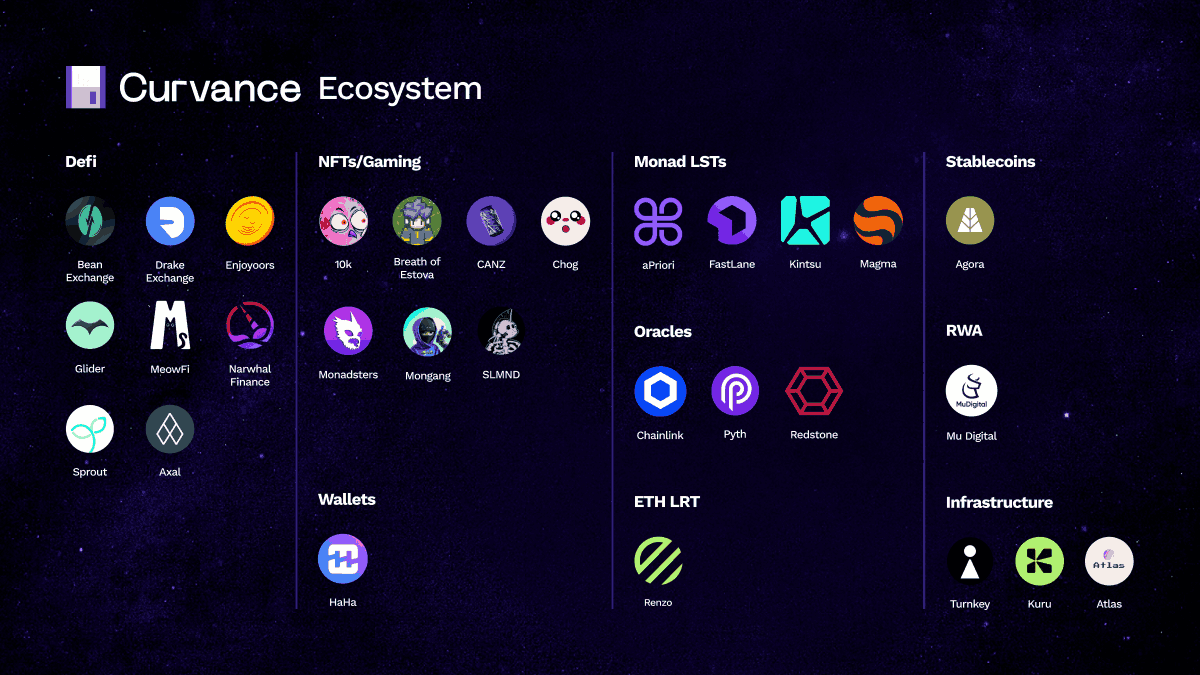
Curvance operates at the center of Monad’s growing DeFi ecosystem. Integration categories include the official native bridge, interoperability protocols (Wormhole, Axelar, LayerZero, Hyperlane, deBridge), and swap aggregators (Bungee, LI.FI, Squid, Relay).
Chain abstraction partners like Particle Network and SOCKET allow users to trade and swap without manually switching networks. These integrations drive liquidity from Ethereum, Solana, and BSC into Curvance, enabling deeper pools, better routing, and minimized slippage.
Monad delivers a performance of 10,000 transactions per second (TPS) with 800ms finality and near-zero gas fees, while maintaining full EVM compatibility. Monad’s architecture is built from the ground up with optimistic parallel execution and custom consensus mechanisms, addressing the scalability, security, and decentralization trilemma.
Frequently Asked Questions About Curvance & MonadBridge
What is Curvance crypto and how does it work on Monad?
Curvance is a hyper-efficient lending protocol on curvance monad that supports yield-bearing collateral with one-click leverage and risk-isolated markets.
How do I safely use a monad bridge?
Access official monadbridge or trusted aggregators, verify URLs through official channels, and bridge monad pathways with small test amounts first.
What are typical bridge fees and times?
Bridging ETH or stablecoins from Ethereum takes 1–10 minutes with minimal fees on the Monad side.
Which wallets are supported?
MetaMask and standard EVM wallets connect seamlessly to both Curvance and monad bridge interfaces.
Conclusion: Why Curvance is Core to the Monad Bridge DeFi Era
Curvance has emerged as the central lending and yield protocol in Monad’s ecosystem, leveraging the chain’s performance while integrating with monad bridge infrastructure. Users gain access to efficient capital usage, diverse yield strategies, and risk-isolated markets.
The protocol is designed to provide a safer, more accessible money market experience, reducing the risk associated with complex DeFi strategies. It enhances capital efficiency by allowing users to borrow against yield-bearing assets without sacrificing their returns.
The protocol serves as a primary destination for bridged assets seeking optimized returns. Follow Curvance on official channels, explore the docs, and open your first curvance crypto position via your preferred monad bridge today.